

VicHip blog
Explore our blog for the latest news, family stories, videos and more!
June 2026
#Hip Health Day
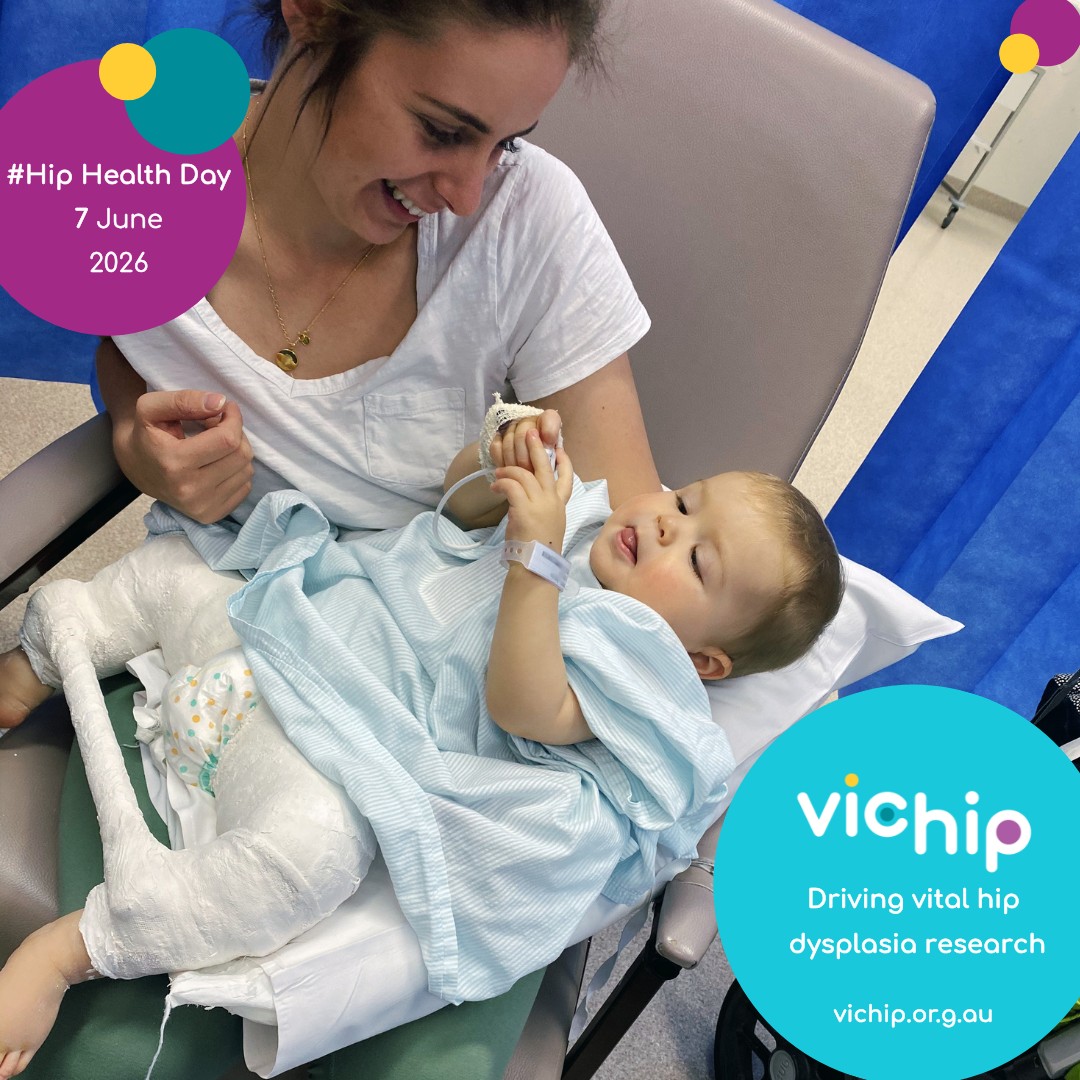
This #HipHealthDay, Sunday 7 June, we’re celebrating you! More than 4,300 Victorian families are helping us transform hip dysplasia care.
While clinical data tells part of the story, your lived experience reveals the true daily challenges. Using your invaluable feedback, we teamed up with The Royal Children’s Hospital to trial practical, co-designed improvements:
- Smarter scheduling and same-day imaging for regional and rural families
- Real-time SMS updates to ease the wait for telehealth appointments
- 3-day check-ins to support you when adjusting to a new brace or cast
- Plain-language visit summaries so you always know the next steps.
We are currently trialling these changes at RCH and plan to roll them out across VicHip locations.
Thank you to our amazing hip dysplasia community — we couldn't do this without you!

May 2026
Better care, guided by you
When it comes to improving hip dysplasia care, clinical data tells only part of the story — the real experts are the families living the journey every day.
We’ve listened to your feedback about long wait times, feeling unprepared for a new brace or cast, and the need for clearer communication. We're thrilled to share that your experiences have become our roadmap for change.
In partnership with The Royal Children’s Hospital, we are turning your insights into real-world improvements. From smarter clinic scheduling and 3-day video check-ins to plain-language medical summaries, we are testing new ways to make the journey smoother and more supportive for everyone.
See how your feedback is shaping the future of care. Read the full story »

March 2026
New research: Outcomes after surgery
We recently completed a study following more than 160 patients to see how a common surgery — medial open reduction (MOR) — supports a child’s hip health as they grow.
The great news? Surgery is 99% successful at getting the hip back into place. However, our research also showed that about 40% of children may still develop hip shallowness years later. This is why it's so important to continue seeing your doctor for check-ups. It allows them to intervene early and ensures the hip stays stable and healthy as your child grows.
February 2026
4,000 reasons to celebrate!
VicHip has reached a major milestone — 4,000 families participating! This achievement reflects the dedication of thousands of families and health professionals working to improve outcomes for children with hip dysplasia. Every clinic visit, data entry and follow-up appointment contribute to a growing body of knowledge that guides better care and treatment across Victoria and beyond.
Thank you to the:
- families who so generously give their time and feedback through interviews and surveys, such as PROMs (Patient-Reported Outcome Measures)
- clinicians and staff at our participating sites
- VicHip research team for their ongoing commitment to making a real difference in children's health.
Real stories that inspire us
Imagine a life transformed by early intervention. Eloise is a perfect example. Diagnosed and treated early, she's now thriving. In contrast, Sharon wasn't diagnosed until adulthood, experiencing severe pain and limited mobility until surgery. These powerful, contrasting stories deeply motivate us and drive our work.

December 2025
VicHip families and friends: Thank you!
As the year ends, we want to say a huge thank you for being part of VicHip.
Over 3,700 families are now involved — an incredible milestone! Your generous support and stories are helping make a brighter future for children with hip dysplasia.
We’ve achieved so much over the past three years thanks to you. Here's a look back at our progress and what's ahead in 2026 and beyond.

August 2025
Monash Children's Hospital hits 700 participants!
The team at Monash Health has reached an exciting milestone with 700 families from Victoria's south-east now taking part in VicHip. This incredible achievement brings the statewide total to over 3,000 participants. These aren't just numbers, they represent real families and clinicians working with us to make a lasting difference in the lives of children with hip dysplasia.
Take a look at the passionate individuals making it all happen, including David Harding (photo), who enrolled their 400th family. Click here »

July 2025
Could AI ultrasound be the future of hip dysplasia screening?
Our team is testing an innovative new ultrasound tool that conveniently connects to a mobile or tablet. It uses AI to quickly analyse hip images. This innovative technology aims to help doctors and nurses see if a baby's hips are developing normally or if more tests are needed.

Carley Clendenning, VicHip Clinical Research Assistant
July 2025
Meet Carley: Driving change for kids
We're incredibly fortunate to have Carley on our team. Her passion for children's health research is deeply personal, stemming from her son's complex heart journey. Combining her nursing and research expertise, she champions positive change for kids and their families. We sat down with her to learn more.

June 2025
#HipHealthDay
Monday, 2 June is #HipHealthDay. At VicHip, we're dedicated to raising awareness about hip dysplasia and the life-changing impact of early detection and treatment.
Why early detection matters
Hip dysplasia affects 1 in 100 newborns and can lead to lifelong pain, disability and complex surgeries. The good news: early diagnosis and treatment can change everything!
Real stories that inspire us
Imagine a life transformed by early intervention. Eloise is a perfect example. Diagnosed and treated early, she's now thriving. In contrast, Sharon wasn't diagnosed until adulthood, experiencing severe pain and limited mobility until surgery. These powerful, contrasting stories deeply motivate us and drive our work.
The power of VicHip
We're more than a registry. We unite families, clinicians and experts from Victoria's leading children's hospitals to:
- identify hip problems earlier
- improve care and treatment through real-world evidence
- support families and clinicians with vital education and resources.
The long-term impact of hip dysplasia isn't always clear until children grow older. That's why our registry and research are so important. We track their health journeys over time, gathering crucial information to pinpoint the best time for intervention and find better ways to detect, treat and manage the condition. Every story helps us improve outcomes for kids with hip dysplasia across Victoria and beyond.
Thank you to our amazing community
A huge thank you to everyone who shares their story with us! Your experiences help us advance hip dysplasia care across Victoria. Together, we're building a future of healthier hips for kids!
To learn more about the signs of hip dysplasia and the importance of early detection, visit About hip dysplasia

May 2025
Exciting news for hip dysplasia families
A huge thank you to all VicHip participants for sharing your stories and experiences about hip dysplasia care. Your feedback is invaluable in helping us understand what's working well and what can be improved to better support Victorian families.
Based on your feedback, we've launched a new sub-study to explore and address the support families need when receiving a diagnosis of hip dysplasia or during treatment.

Gwen, VicHip placement student from Deakin University
March 2025
Student spotlight: Gwen shares her experience at VicHip
We recently had the pleasure of hosting Gwen, a bright final-year Biomedical Science student from Deakin University, for a student placement at VicHip. Gwen dove headfirst into our world where health research and science meet communication and patient care, and we were eager to hear about her experience.
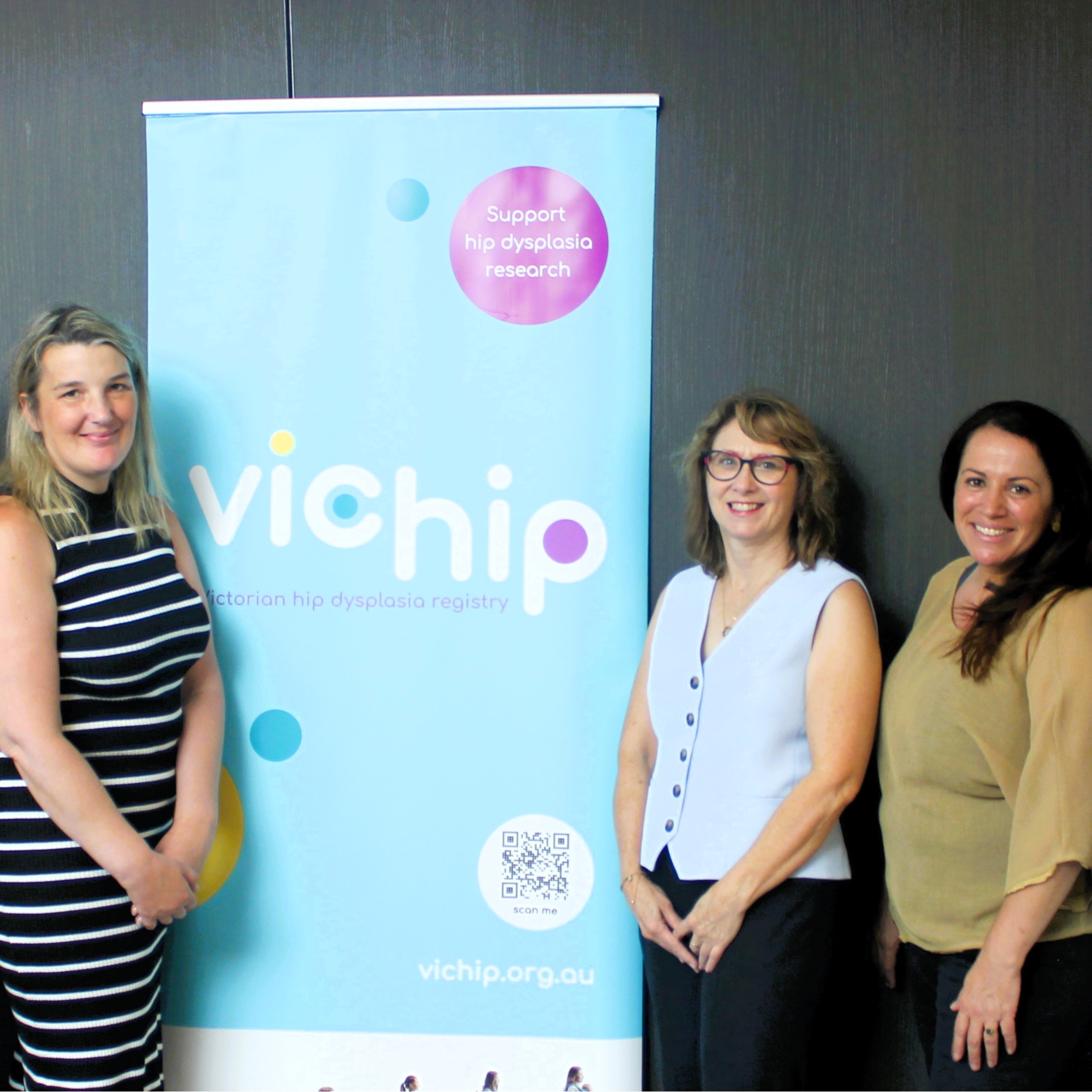
L-R: Dr Natalie Hyde, Sharon (consumer advisor) and Melissa Formosa
Feburary 2025
Sharon’s story: Advocating for hip dysplasia awareness
Sharon's journey with hip dysplasia began unexpectedly in her fifties, despite a lifetime of being active in sports and dance. A diagnosis of bilateral hip dysplasia marked the start of many challenges but also ignited her passion for advocacy.

December 2024
What are PROMs?
Patient-Reported Outcome Measures (PROMs) are tools or surveys designed to collect information directly from the perspective of the patient or caregiver about their child’s health, care and well-being. These measures are used globally in clinical registries and medical research.
If you are a parent or caregiver of a child with hip dysplasia, your real-life experiences and insights are incredibly valuable to our research. Your participation in our online surveys using PROMs plays an important role in improving the quality of healthcare in our community and achieving better outcomes for people with hip dysplasia. Together, we can make great strides in better understanding and managing the condition.
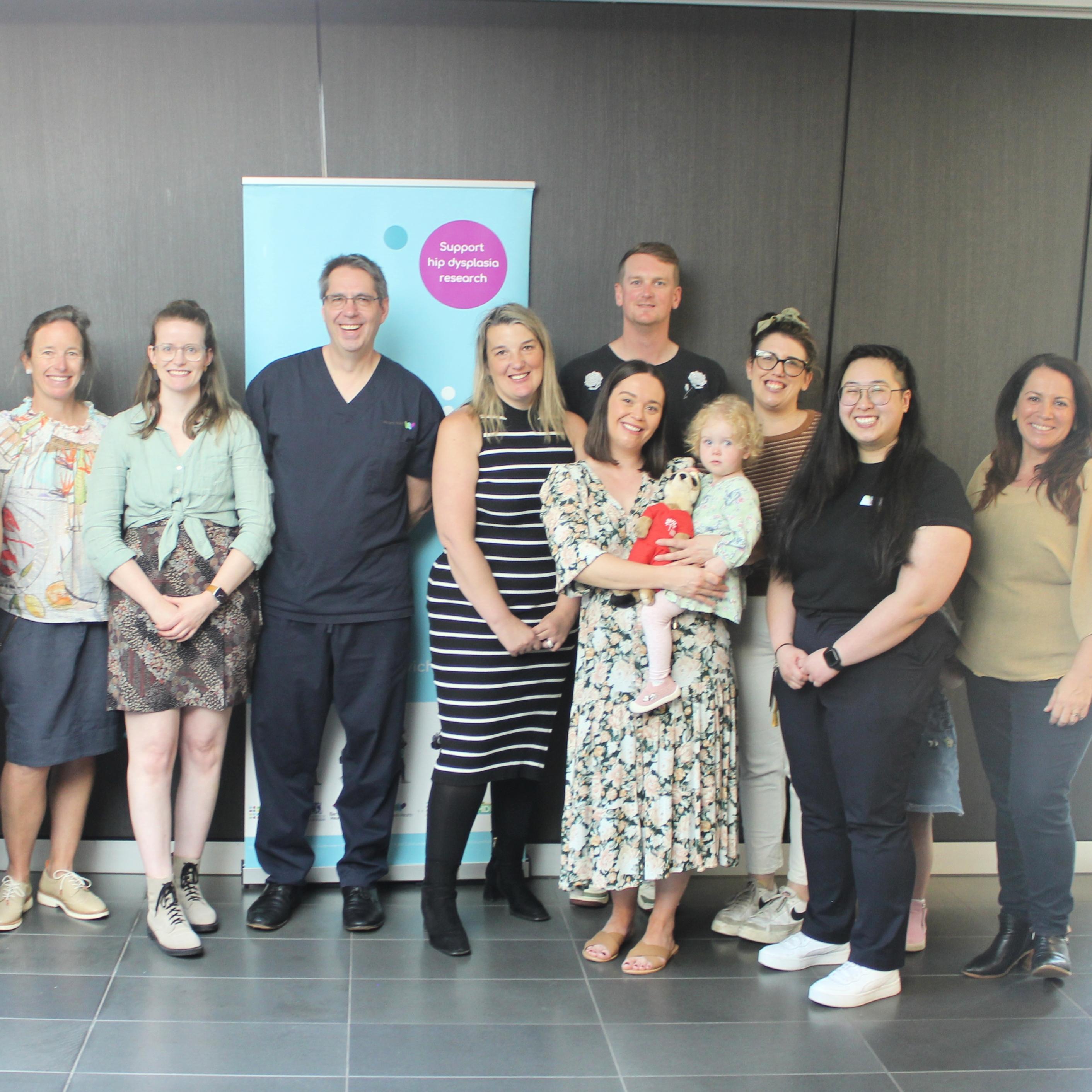
VicHip team and 1000th family
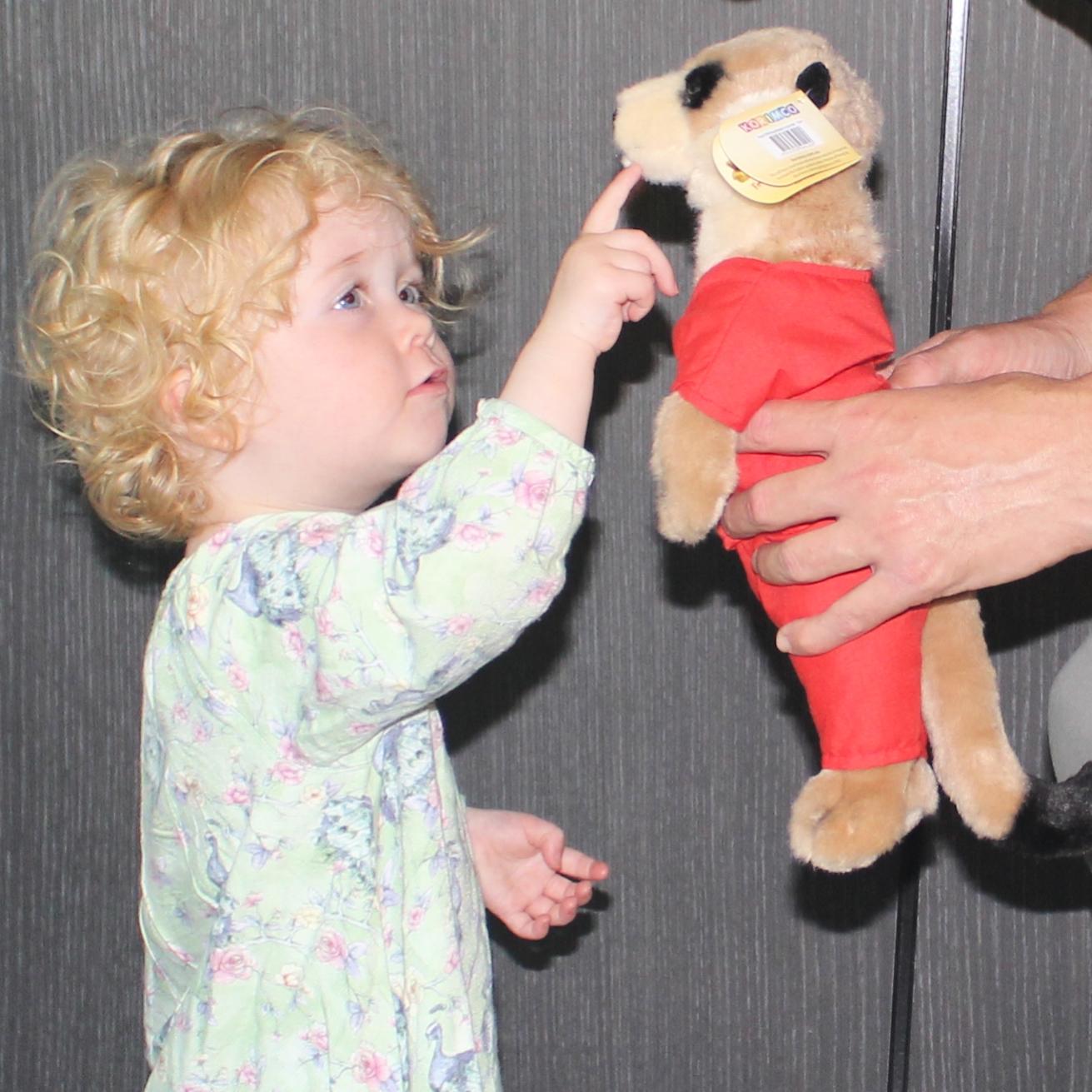
Eloise, VicHip's 1000th participant
27 November 2024
Celebrating 1000 participants
Today we celebrated a significant milestone for VicHip: we have reached 1000 participants! To mark this occasion, we held a special morning tea at Sunshine Hospital with the family of our 1000th participant, Eloise, and her parents, Emily and Ryan.
Little Eloise, 16 months old, was the star of the day, blissfully unaware of her important contribution to medical research. Diagnosed with hip dysplasia at just four months old, Eloise’s story reflects the challenges faced by many families. Read Eloise's story »
"It's a great milestone for the study," said Emily. "We were really happy to be part of the celebration!."
Thank you to our amazing participants
Dr Natalie Hyde, VicHip’s research lead, expressed her gratitude, "Reaching 1000 families showcases the amazing community spirit surrounding hip dysplasia research. We’re incredibly thankful for their support. Together, we’re exploring innovative strategies and programs that can make a real impact on the lives of kids with hip dysplasia and their families. We couldn’t do this without them."
A future of healthier hips
VicHip is working towards a future where hip dysplasia is detected and treated earlier, ensuring that children like Eloise have the best chance to run, jump and dance through life with healthy hips.
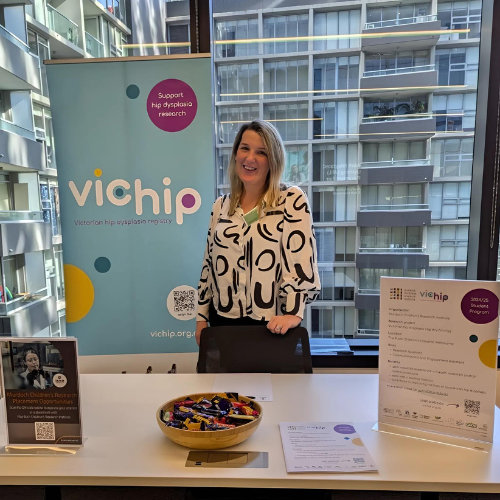
Dr Natalie Hyde, VicHip Post-Doctoral Research Lead
September 2024
VicHip work experience program 2024/25
Our work experience program offers students a unique opportunity to contribute to groundbreaking research that could help improve the lives of people with hip dysplasia.
Learn from leading experts like Dr Natalie Hyde, VicHip's Post-Doctoral Research Lead. Our program provides invaluable hands-on experience, as showcased at the recent Deakin University student placement fair.
Available roles:
- Research Assistant: Engage in in-depth health research, assist with recruitment, data collection, analysis and interpretation
- Communications and Engagement Assistant: Play a vital role in translating research and creating engaging materials for the hip dysplasia community.
Interested? Contact us!

The VicHip Team
August 2024
Spotlight on the VicHip Team
VicHip is more than a registry. We are a passionate research team working hand-in-hand with families to enhance hip care and outcomes for people with hip dysplasia.
Leading the way is A/Prof Leo Donnan, an orthopaedic surgeon specialising in hip dysplasia. As the Lead Principal Investigator of VicHip, he is driving innovative research and fostering global collaboration.
Our powerhouse team of orthopaedic surgeons and researchers supports VicHip across Victoria, including Mr Richard Angliss, Mr Brian Loh, Mr Chris Harris, Mr Mark O'Sullivan and Melissa Formosa, VicHip's Senior Clinical Research Coordinator. They bring diverse expertise and a shared commitment to improving patient care and services.
Supporting families on-the-ground are our clinical research assistants: Carley Clendenning, Minh Ngo, Emily Baird and Simone Cranage. They provide essential support to participants and clinicians, ensuring a positive research experience.
Powering research, data and communication behind the scenes are Cain Brockley, Dr Li Huang, Dr Natalie Hyde, Rashida Ali and Rebecca Collins. They play crucial roles in sonography, health economics, research, data management, privacy and engagement.
Discover more about Our Team and read their individual bios.
June 2024
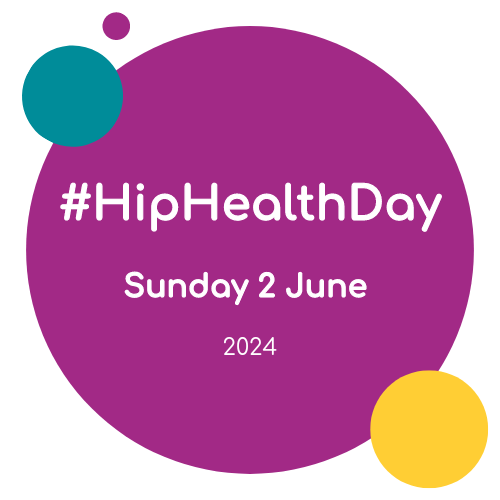
Hip Health Day, 2nd June
Get ready for #HipHealthDay 2024 on Sunday, 2 June. Throughout the week, we'll be raising awareness about hip dysplasia and sharing content on our social media channels. Let's champion research and healthy hips for everyone!
Follow us on MCRI socials:
- Facebook @MurdochChildrensResearchInstitute
- Instagram @Murdoch_children
- YouTube @MurdochChildrens
- X @MCRI_for_kids
- LinkedIn Murdoch Childrens Research Institute
May 2024
Why join VicHip? | Watch video ▶️
Meet Bec, a mother of three, who shares her experience with hip dysplasia. Find out why she’s taking part in VicHip.
In this short video ► Bec talks about:
- early diagnosis and treatment
- connecting with families facing similar challenges
- the importance of medical research in improving children's hip care.
Want to discover more? Read our frequently asked questions for parents.
May 2024
Understanding VicHip | Watch video ▶️
In this short video, Associate Professor Leo Donnan, our Lead Principal Investigator, discusses the challenges in detecting hip dysplasia and the aims and benefits of VicHip.
Watch the video ► Understanding VicHip: Advancing hip dysplasia research
April 2024
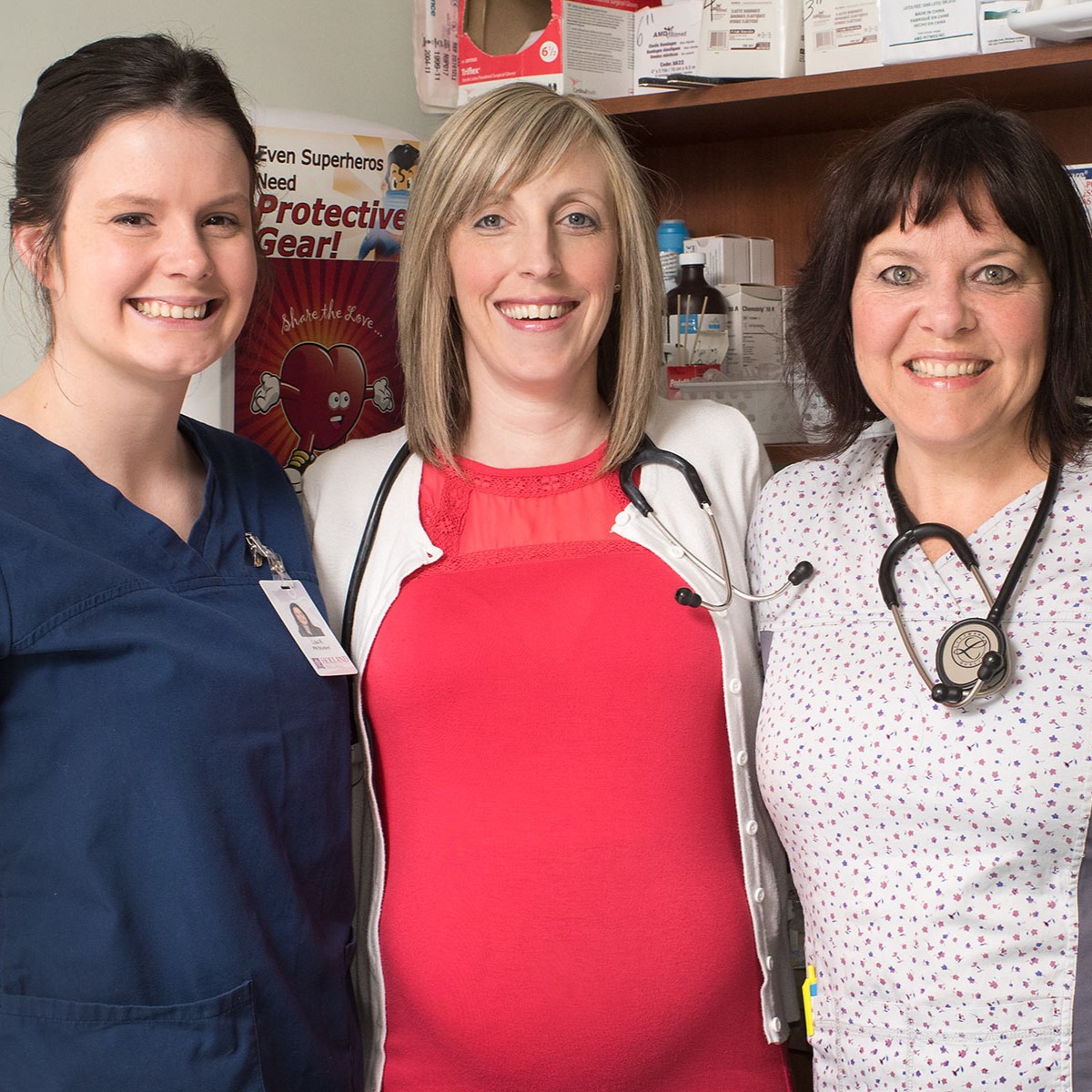
Insights from Maternal Child Health Nurses
Maternal Child Health Nurses (MCHNs) play a fundamental role in identifying hip abnormalities during routine checks, but physical examination alone has limitations. A VicHip survey of MCHNs highlighted the importance of early intervention but also revealed challenges like difficulty assessing unsettled infants, unclear referral pathways and differing clinical opinions that hinder diagnosis. These findings are key to improving detection and management strategies through enhanced education and awareness, practical training for MCHNs, clearer referral pathways, and better resources for healthcare professionals and parents. Overall, the report calls for collaboration and shared responsibility among healthcare providers to enhance the quality of hip care and services across Victoria. By empowering MCHNs as champions of early detection, adopting a unified approach and implementing more robust guidelines, we can pave the way for a future of healthier hips.
Read the Executive Summary or contact us to request the full report.
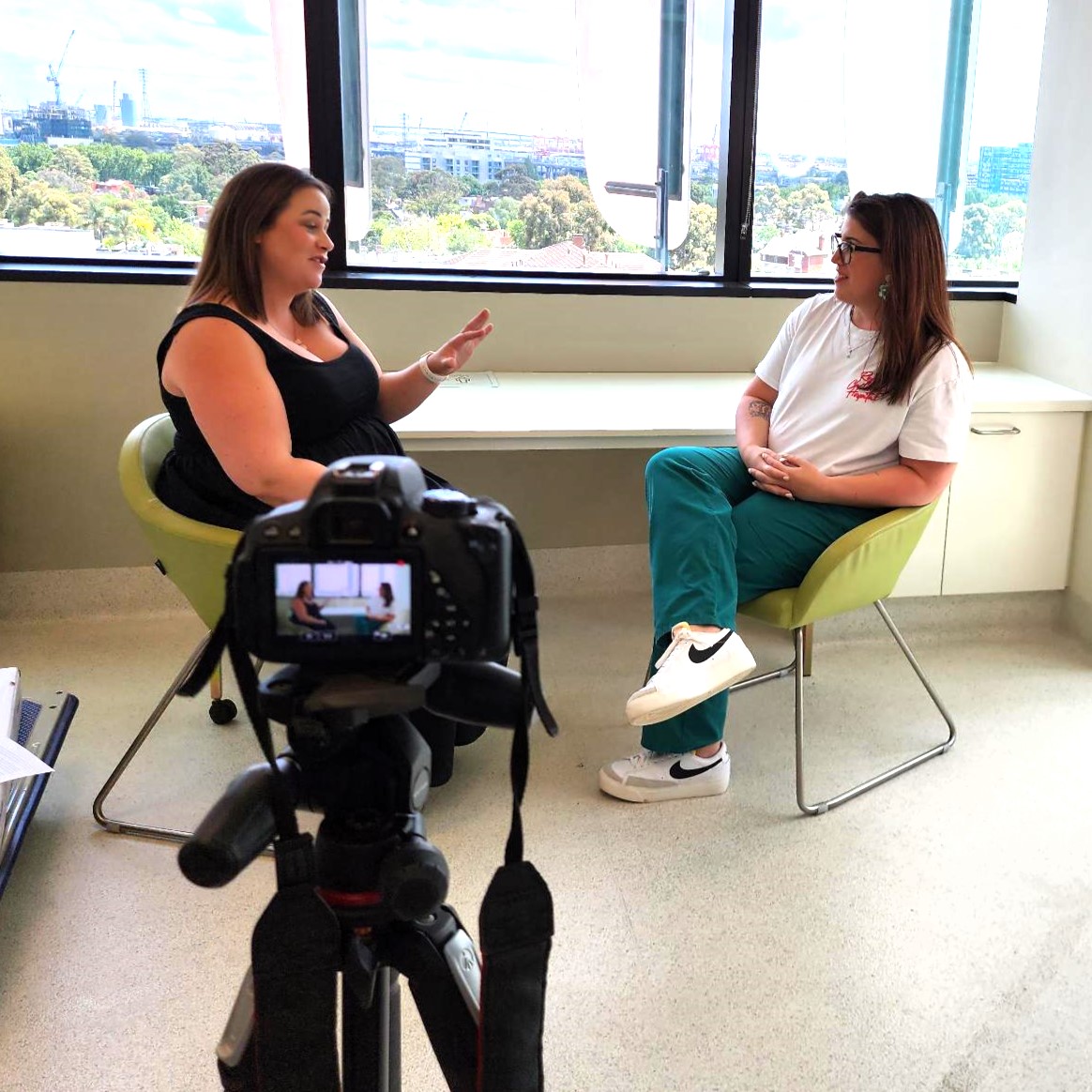
Bec (parent) and Carley Clendenning, VicHip Clinical Research Assistant
15 December 2023
New video coming soon!
We're excited to share a behind-the-scenes peek at a new video for parents coming soon! You'll hear directly from a VicHip parent who will share their experience with hip dysplasia and explain the benefits of joining VicHip. We can't wait to share it with you here on our website, so stay tuned!
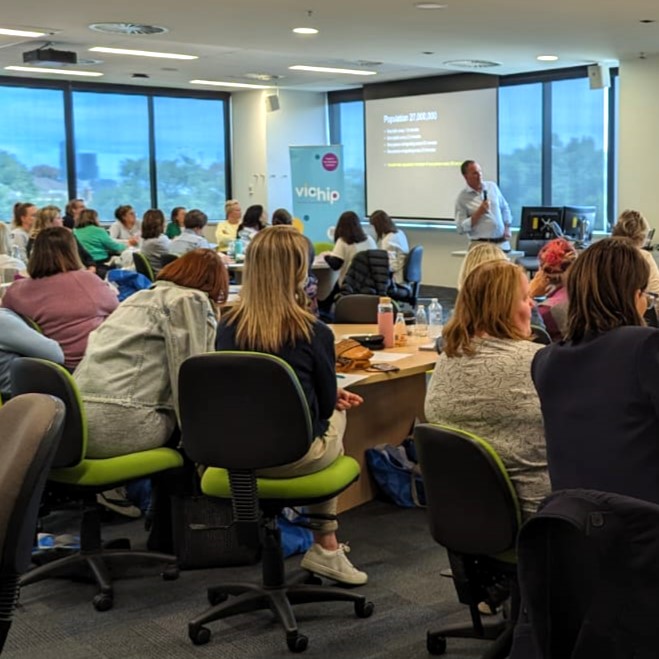
17 November 2023
Did you know: VicHip provides training to health professionals?
It was wonderful to have maternal child health (MCH) nurses from Victoria and beyond join us for a hip dysplasia education session at The Royal Children's Hospital. We highly appreciate the opinions and experiences shared regarding the diagnosis, care and treatment of hip dysplasia from a clinical perspective. Your input plays a crucial role in ensuring the views of MCH nurses are prioritised in decision-making and research at VicHip. Thank you for attending!
Discover more for Health Professionals »
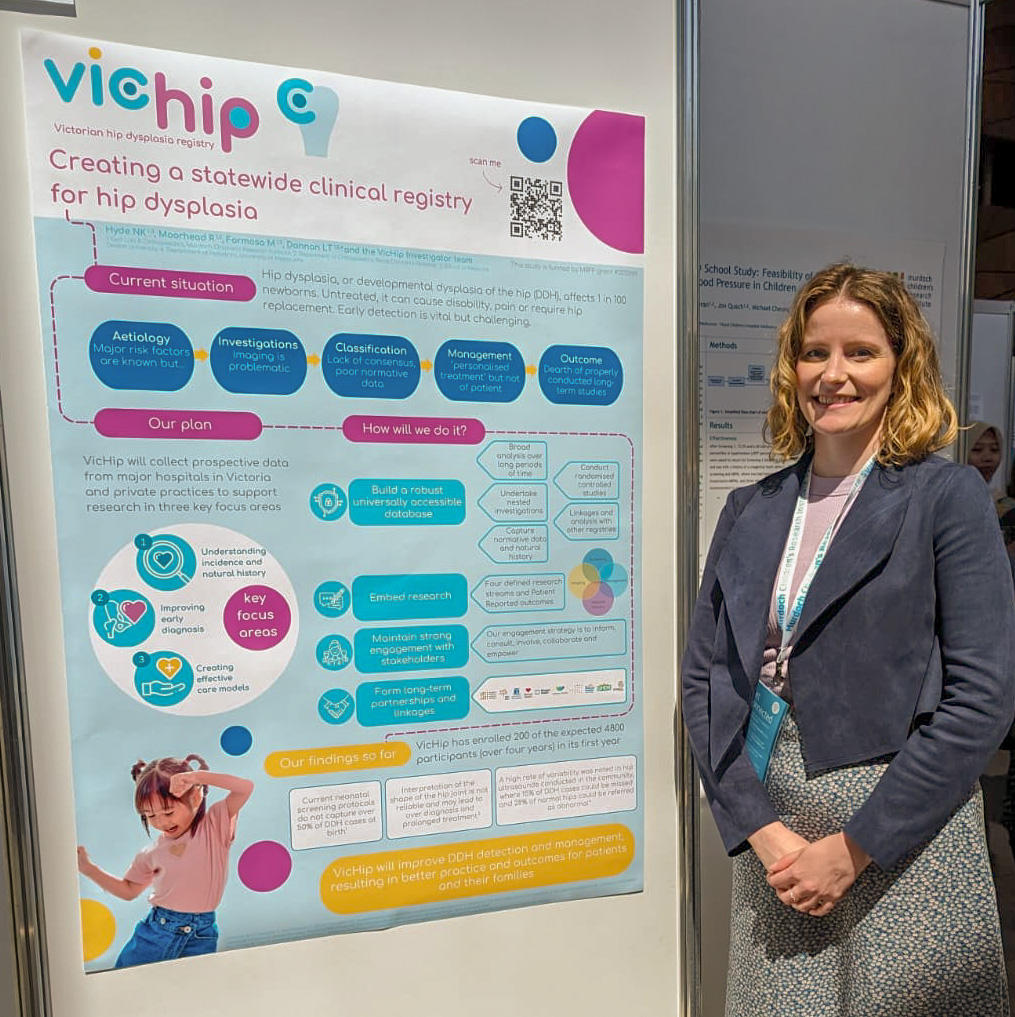
Bec Moorhead, Clinical Research Coordinator
24 October 2023
VicHip shines at the MCRI Symposium
VicHip's Clinical Research Coordinator, Bec Moorhead, and our team proudly presented a poster showcasing our clinical registry at the MCRI Symposium: Impact Powered by Research, held at the Melbourne Convention and Exhibition Centre. Our team was honoured to participate in this event and share our research strategy and latest findings with our esteemed colleagues. The poster was well-received, and we are grateful for the opportunity to demonstrate our commitment to improving hip care and outcomes for patients with hip dysplasia. 🌟 #VicHip #hipdysplasia #hipregistry #hipresearch
1 October 2023
Hip ultrasound reliability: geometric vs. morphological
This study on the reliability of hip ultrasound interpretations highlighted challenges in determining what is a high-quality ultrasound. It found that geometric measurements are reliably interpreted and may be useful as a further measurement of quality. On the other hand, morphological features are generally poorly interpreted, but a simpler binary classification considerably improves agreement. As there is a clear dose response relationship between geometric and morphological measurements, it raises questions about the significance of morphology in diagnosing hip dysplasia. Read the full article:
The Bone and Joint Journal, 1 October 2023, Donnan M, Anderson N, Hoq M, Donnan L. Paediatric hip ultrasound. Bone Joint J. 2023;105-B(10):1123-1130. doi:10.1302/0301-620X.105B10.BJJ-2023-0143.R1
A/Prof Leo Donnan, VicHip Lead Principal Investigator
20 September 2023
VicHip presentation | Watch online ▶️
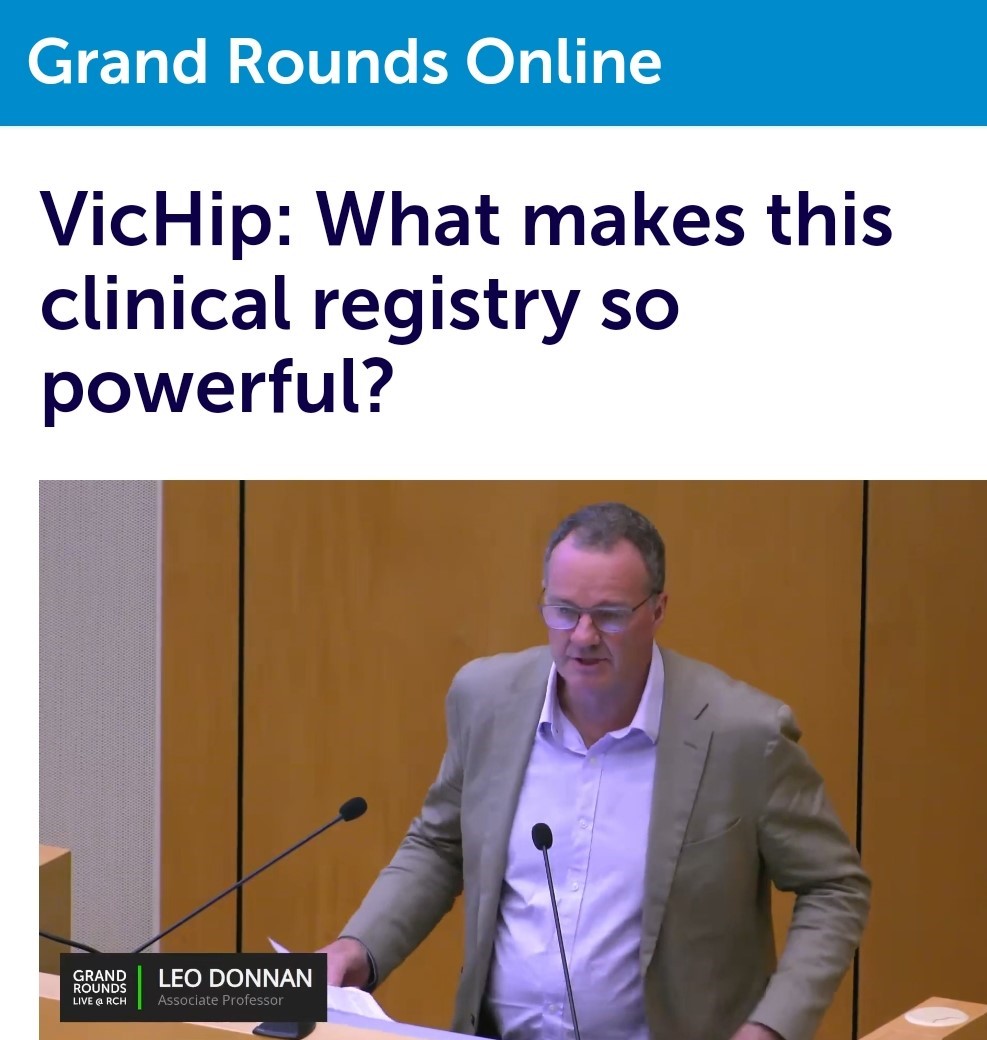
At The Royal Children's Hospital's Grand Rounds, VicHip team members showcased their ground-breaking approach to enhancing hip dysplasia care and patient outcomes in Victoria. During the session, Associate Professor Leo Donnan and team members Rebecca Collins, Melissa Formosa and Dr Natalie Hyde explained VicHip's streamlined process for clinicians, focus on stakeholder engagement, integrated data systems and innovative research strategies.
Watch online here ► VicHip: What makes this clinical registry so powerful?
30 August 2023
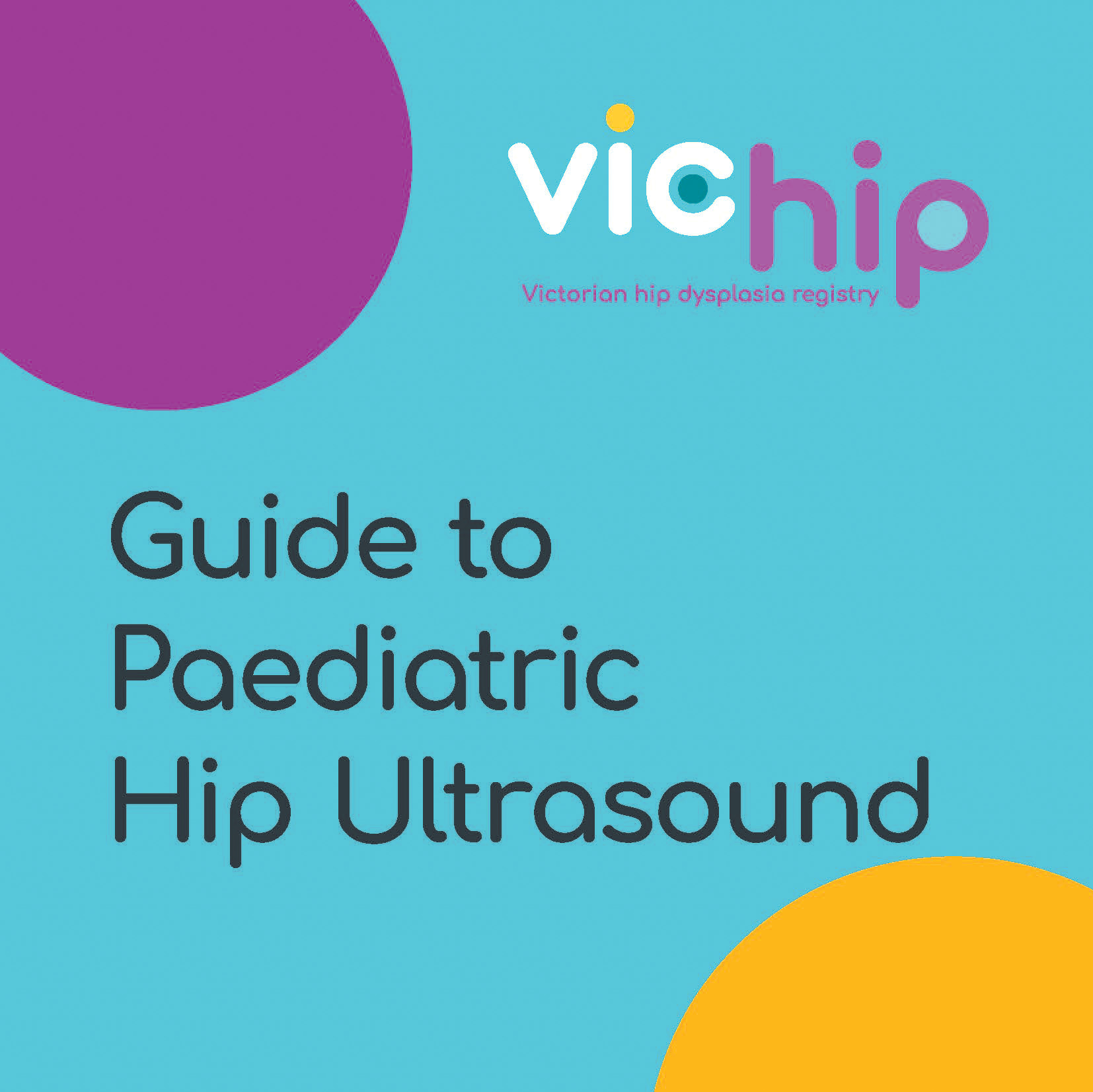
Guide to paediatric hip ultrasound
Welcome to our clinician guide designed to help diagnose and assess hip dysplasia using ultrasound imaging. Our goal is to support clinicians, radiographers and radiologists who perform and report on paediatric hip scans. Hip ultrasound remains the most important tool in the detection and monitoring of hip dysplasia in infants. It is crucial to have high-quality scans and interpretations to guide care and treatment decisions, highlighting the importance of expertise in this field. Our guide aims to enhance ultrasound quality standards for optimal patient outcomes. It does not replace proper training, experience or accreditation. Instead, it seeks to enrich existing knowledge and expertise, and strengthen hip care and services in Victoria.
Download Guide to paediatric hip ultrasound

7 August 2023
Unreliability of neonatal examination and ultrasound for diagnosing DDH
In a retrospective cohort study conducted in Melbourne, Australia, researchers examined the effectiveness of neonatal clinical examination and selective ultrasound screening as tools for diagnosing DDH.
Despite the utilisation of a selective ultrasound screening program (those infants with known risks for DDH or abnormal clinical findings) the research team discovered that only approximately half of all DDH cases were detected early in infancy. In contrast, most infants who had ultrasounds from selective screening did not have DDH.
The study also found that skin crease asymmetry, a specific clinical sign, was more common with later presentation. While breech presentation and positive Barlow/Ortolani test were associated with early presentation.
Furthermore, infants with DDH, whether diagnosed early or late, displayed similar clinical characteristics and the incidence of DDH is higher than previously reported in Australian studies.
These findings highlight the ongoing challenges in achieving reliable DDH screening in newborns and emphasise the need for an alternative approach to neonatal screening methods. At the same time, community healthcare providers must maintain careful clinical monitoring of infant hips throughout the child's first year of life and beyond.
Read the full article published in the Journal of Paediatrics and Child Health in August 2023. Mr Mitchell Johnson, A/Prof Carl Kuschel and A/Prof Leo Donnan, VicHip’s lead Principal Investigator, collaborated on the paper.
Journal of Paediatrics and Child Health, 7 August 2023 Neonatal clinical examination and selective ultrasound screening are not reliable for the early diagnosis of hip dysplasia: A retrospective cohort study. Johnson MD, Kuschel C, Donnan L. Neonatal clinical examination and selective ultrasound screening are not reliable for the early diagnosis of hip dysplasia: A retrospective cohort study. J Paediatr Child Health. 2023 Aug 7. doi: 10.1111/jpc.16472. Epub ahead of print. PMID: 37545325.
Have questions, feedback or want to get involved?
 Please contact us
Proudly in partnership with






VicHip is funded by the Australian Government Department of Health and Aged Care under the Medical Research Future Fund grant 2015989.
Murdoch Children's Research Institute acknowledges the Traditional Custodians of lands on which we work and pay our respect to their Elders, past, present and emerging.